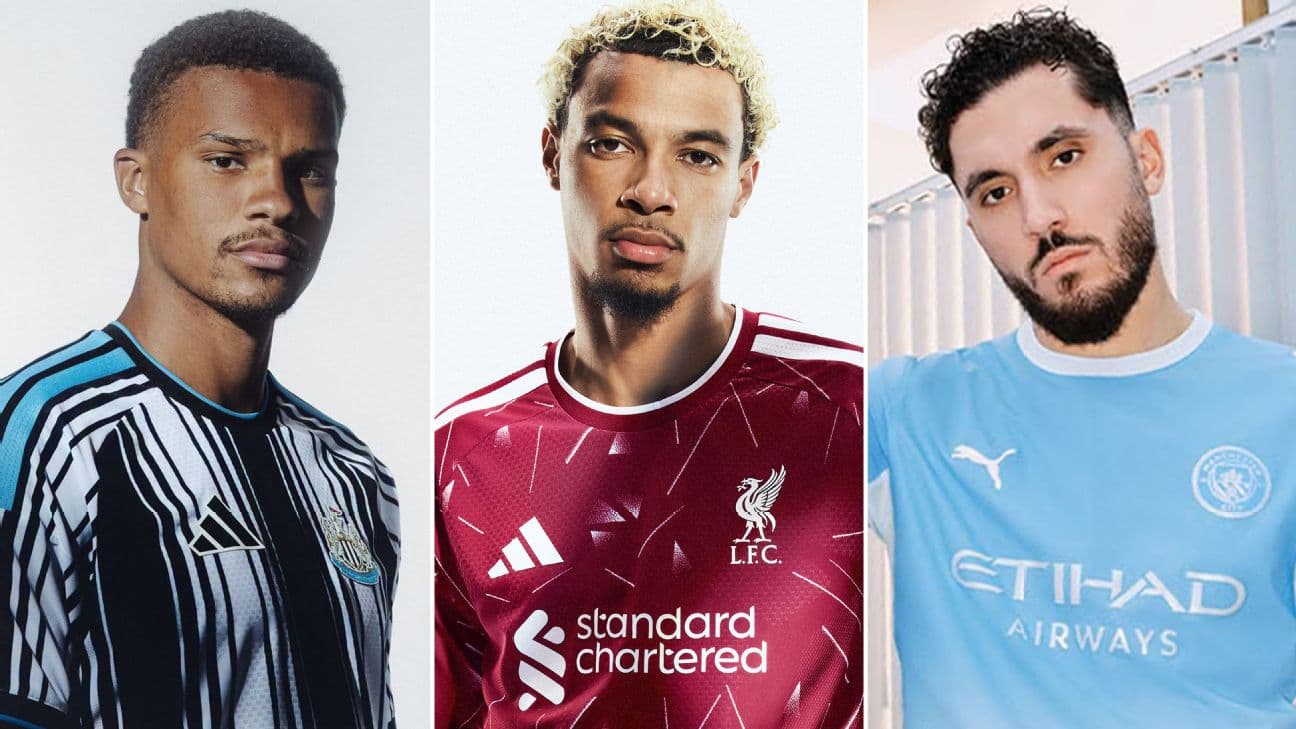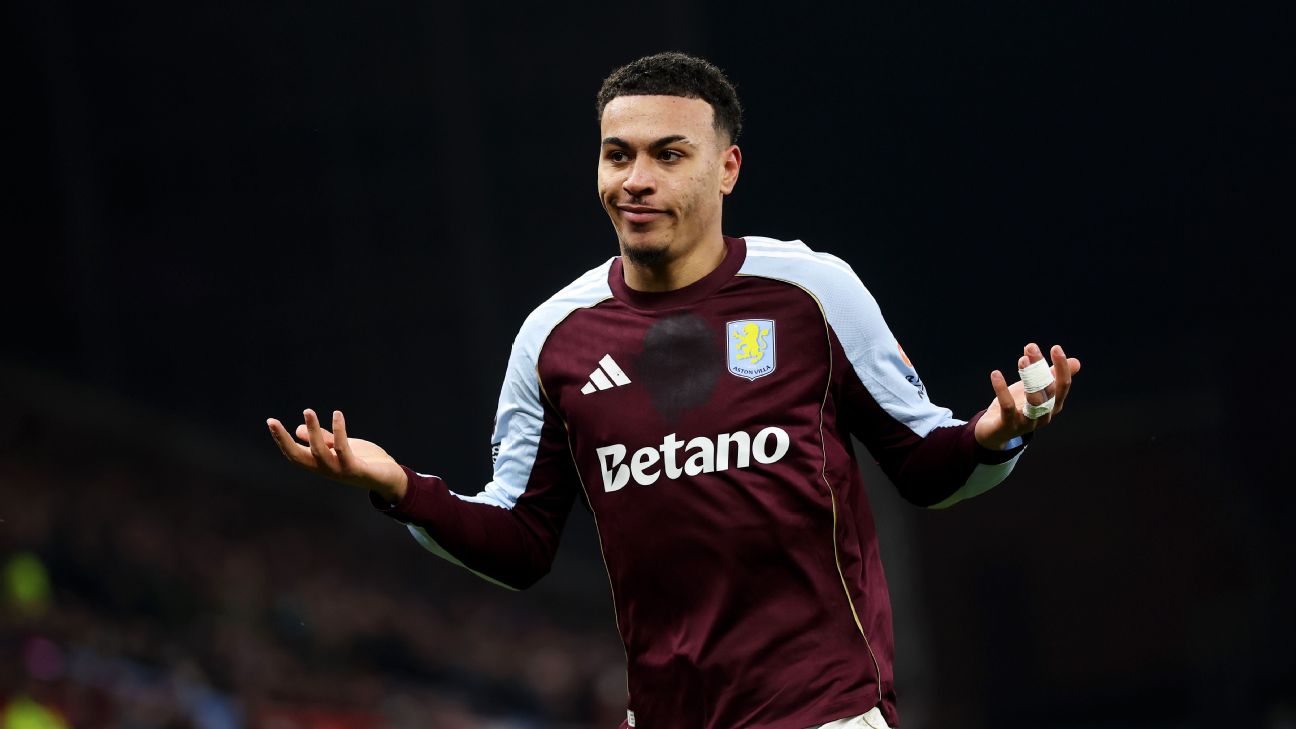
The transfer record for a British footballer has been smashed twice in the space of three weeks: First Manchester City struck a £116 million ($155.5m) deal to sign Nottingham Forest midfielder Elliot Anderson, then Chelsea agreed a £117 million ($156.9m) deal for Aston Villa attacker Morgan Rogers.
Both players are English, 23 years old, have been mainstays in the England national team since Thomas Tuchel took over in 2025, and they enjoyed stellar seasons for their respective clubs. Anderson played a big part in saving Forest from relegation, while Rogers powered Villa to a fourth-place finish (and a spot in the UEFA Champions League) and scored a goal to help the club win the UEFA Europa League final.
It became clear by the end of the season that a) both players were going to move to an elite club, and b) their transfers were going to cost a lot of money.
Rogers and Anderson slot straight in as the fourth- and fifth-most expensive players of all time. They become the 12th and 13th players whose transfers have cost £100 million or more -- eight of which have all moved since 2020, as inflation continually drives fees up.
But when you look at the list of most expensive deals in history and get a sense for the company Rogers and Anderson now keep, it begs two questions: Is it worth spending this much to sign a single player? And if so, are there lessons to be learned from previous deals to make sure it is a success?
Why the transfers of Rogers and Anderson cost record fees
Before we delve into the cross-comparisons, we should first establish the logic for paying record fees to sign these two players.
Yes, there's an obvious "English tax" being applied here when signing homegrown players, which is vital to consider when talking about clubs who regularly need to register UEFA competition squads with a certain amount of domestic players. There's also a "Premier League-proven tax" at play, as clubs increasingly recruit from inside the league -- at a major premium -- to remove any question marks over whether a new signing can adapt.
And then there's their undoubted qualities.
Anderson won by far the most duels (297) in the Premier League last season, while also racking up the most touches of the ball (3,308). That's a rare combination and marks him out as a complete midfielder, capable of calmly recycling the ball as well as winning it back voraciously. He also takes a good set piece and can hit a shot from range -- as City found out to their detriment when he scored for Forest against them in March.
Rogers, meanwhile, bagged 25 goals and assists in all competitions, established himself as a long-range shooting expert and regularly embarked on bulldozing runs through midfield. His combination of size, speed and talent is not common -- even in today's ultraphysical game. He basically carried Villa's attack single-handedly from October to February.
Crucially, both Anderson and Rogers proved themselves extremely physically durable, as they played over 4,000 minutes each in the most taxing league in the world.
And then there's the fact that the two clubs who signed them were so keen to do the deals.
City needed replacement for Bernardo Silva in midfield, plus a long-term Rodri replacement, or perhaps even both; Anderson fits the bill. Chelsea have held a long-term interest in Rogers but likely sensed this was the window to get him, as Aston Villa are under pressure from UEFA to generate revenue or else they'll fail to meet the terms of their settlement agreement and be banned from European competition (although it should also be noted, Chelsea are also bound to a UEFA settlement agreement and will likely need a significant number of outgoings in order to balance off this deal). Plus, they needed to get in ahead of Arsenal, who have been linked with a move all summer.
Add in that Anderson was contracted to Forest until 2029, while Rogers signed an extension with Villa last November until 2031, and this created strong negotiating positions for both clubs and basically necessitated that a huge fee would be required to get them out.
They join esteemed company, but it's a cursed list
History does not reflect kindly on deals over £100 million. In fact, a cursory glance through the most expensive transfers of all time might convince some club to think again, as it mostly makes for grim reading.
Neymar's world record transfer (€222 million) from Barcelona to Paris Saint-Germain has stood since 2017, with no club going anywhere near that figure -- and for very good reason. The Brazil winger is undoubtedly one of the most talented players the game has ever produced, yet he came nowhere close to proving worth that outlay due to a serious of injuries and poor form.
From there, working our way down the list, we can comfortably label the megadeals to bring in João Félix, Antoine Griezmann, Philippe Coutinho and Romelu Lukaku as complete failures. Kylian Mbappé and Jack Grealish delivered far more for their clubs, but remain debatable in terms of success: the former could not deliver the Champions League to PSG and left for Real Madrid on a free transfer, whereas Grealish did for City, but in what was the only unequivocally excellent season of his five at the club so far.
Meanwhile, it's too early to judge Florian Wirtz and Alexander Isak, who are just one year into their Liverpool careers (and in Isak's case, given his injury-ridden campaign, you can barely even say that).
Now for the positives, of which there are two, possibly three.
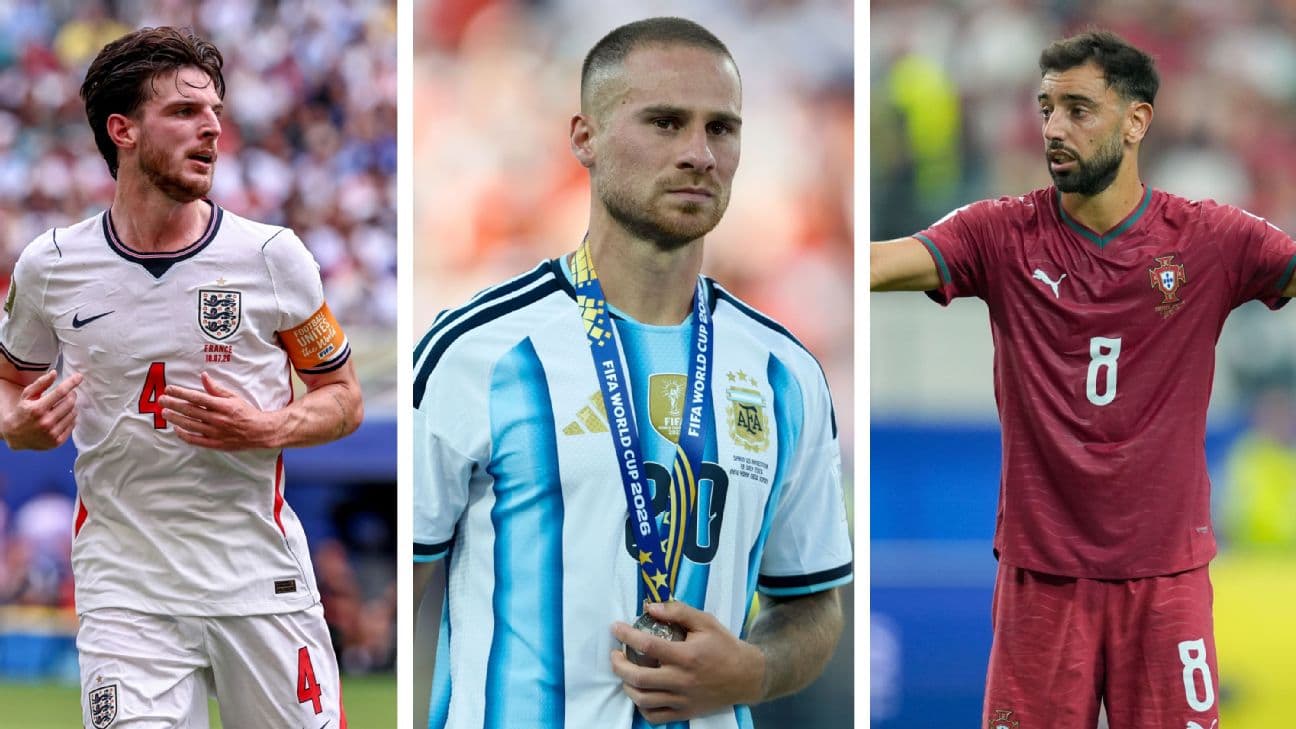
Arsenal and Chelsea will be more than happy with their £100 million investments to sign central midfielders Declan Rice and Moisés Caicedo, respectively. They've both been superb for three seasons and have only enhanced their reputations since moving in 2023. If they transferred again, their transfer would once again cost more than £100 million.
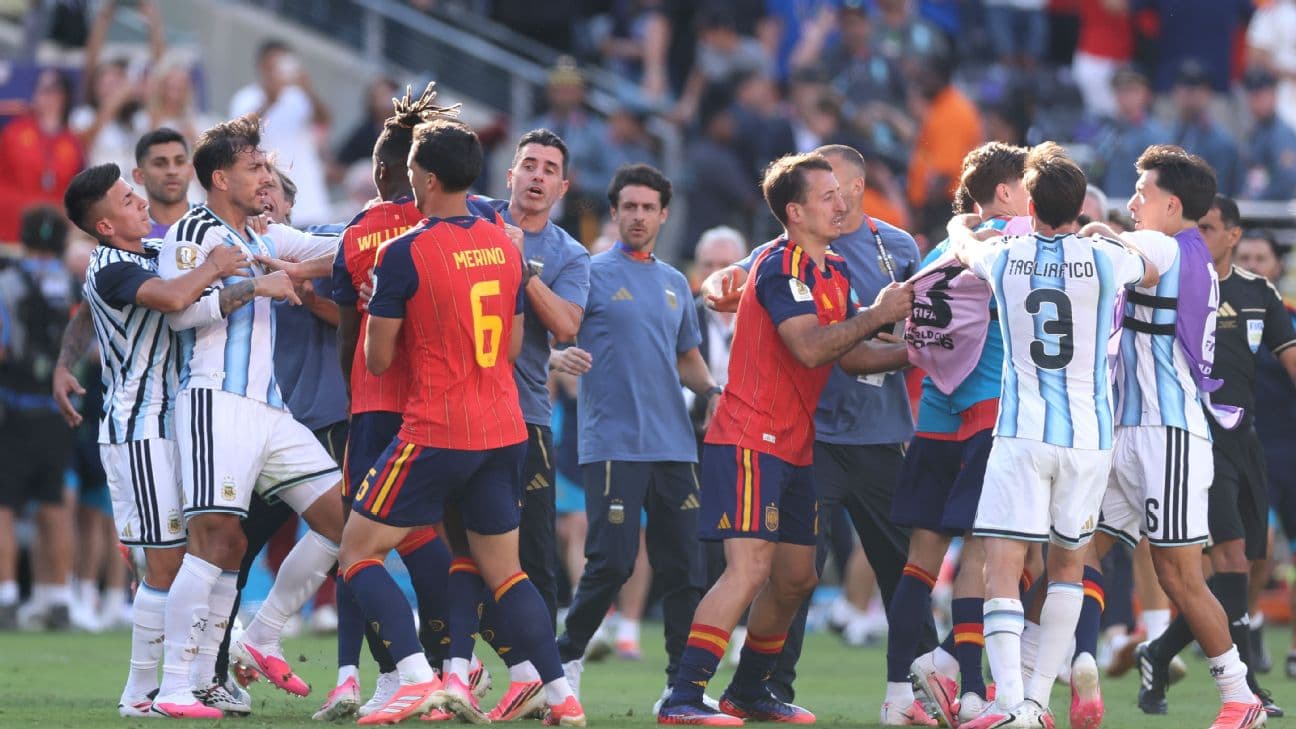
Then there's Enzo Fernández of Chelsea, whose transfer value has held steady since he moved from Benfica for €121 million in 2023. He might qualify as more of a Grealish/Mbappé case of "borderline worth it" than Rice/Caicedo's "outright worth it," but the transfer certainly has not failed. His move is a little hard to define, as his time at Stamford Bridge has been a genuine roller coaster -- much like his 2026 World Cup, in which he went from hero (in the semifinals) to villain (in the final) by picking up a red card in the second half as Argentina lost to Spain.
What common thread links success and failure for big transfers?
The common thread linking all the failed deals in the above list is that they're attackers. Meanwhile, the common thread among those who haven't is that they're not attackers.
But while that's too small a sample size -- a pool of eight players vs. a pool of three -- to establish a firm connection, a further scroll down the list of most expensive transfers in history does help cement the point.
Ousmane Dembélé's (€105 million) time at Barcelona was a disaster, as was Eden Hazard's €100 million move to Real Madrid; Cristiano Ronaldo's blockbuster €100 million move to Juventus did not work out, while the less said about Antony (€95 million) and Jadon Sancho's (€85 million) time at Manchester United, the better. Gonzalo Higuaín's (€100 million) spell with Juventus started strongly, but fizzled out too fast.
Of course, there are some successes speckled in there: Harry Kane (€100 million) has succeeded at Bayern Munich, as did Gareth Bale (€100 million) at Madrid, while Ronaldo's first big move (€100 million), from Manchester United to the Bernabéu, went brilliantly. But the successes are far outweighed by the failures.
Meanwhile, big money spent in other positions continues to look strong: midfielder Jude Bellingham (Real Madrid, €103 million), defender Joško Gvardiol (Man City, €90 million), defender Virgil van Dijk (Liverpool, €84.4 million) have all hit. And midfielder Paul Pogba's (€105 million) time at Manchester United was tumultuous, but he was epic in spells.
It's still a small sample size, but there's enough to suggest a pattern: Attackers generally don't live up to exorbitant fees, but other position groups stand a better chance. So why is that?
Attackers get a rough deal
There is no absolute answer here. But despite its crudeness and, in many cases, outright disingenuity, it remains the case that attackers are, by and large, judged on goals and assists. There are many more metrics available, and there are many different ways to statistically evaluate the different types of forwards, but if they're not scoring and assisting then they generally don't survive the tidal wave of narrative that follows.
Félix, Griezmann, Coutinho, Lukaku, Grealish, Dembélé, Hazard, Antony, Sancho & Co. simply did not deliver anywhere near enough production to be considered worth the fees paid to sign them. Exactly what bar they needed to hit is undefined, but the common consensus is that Félix and Grealish barely nudging above 10 league goals and assists combined for Atlético and City respectively was not enough.
Other factors, including injuries, affected some of these players (especially Hazard), but they all failed the numbers game, making their transfers easy to dismiss as a waste of money.
So, keeping it simple: If clubs spend over £100 million on a new attacking player then they expect them to score and assist freely. If they don't, the transfer is deemed a failure.
But for players who play deeper in midfield or in defense, there is no silver-bullet statistic to judge them by. You'd be mad to judge the success or failure of Rice's Arsenal tenure solely by his goals and assists, because his role is so much more encompassing than that. Similarly, Van Dijk's singular impact on Liverpool's defense cannot be evaluated by a team-wide clean sheet metric, because he is just one of five members of the rear guard.
Perhaps it's a case of players in deeper positions getting more touches on the ball per game, and contributing to more phases of play, so they get to prove their worth more consistently across a game? Perhaps these players are naturally more consistent, so their lows aren't anywhere near as low as a striker whose shooting goes awry one afternoon and likely costs the team three points?
Projecting the next chapter for Rogers and Anderson
Recent history suggests the £116 million deal struck for central midfielder Anderson is far more likely to prove successful than forward Rogers' for £117 million.
The likelihood is that Anderson will slot into Manchester City's midfield and do the simple things well, to a very high level. He'll win the ball back, trap opponents in their own defensive third and use the ball smartly. His physical capacity is greater than most other players in the league and that will guarantee a certain level of effectiveness. If all that is a driving factor in a dominant-looking City side, he'll be credited with providing the platform for it.
Rogers will provide some spectacular moments for Chelsea, be it hammer strikes from distance or lung-busting runs from deep. But such is the high-risk/high-reward nature of his play, plus his natural inconsistency as a forward. He'll also have games where nothing goes right.
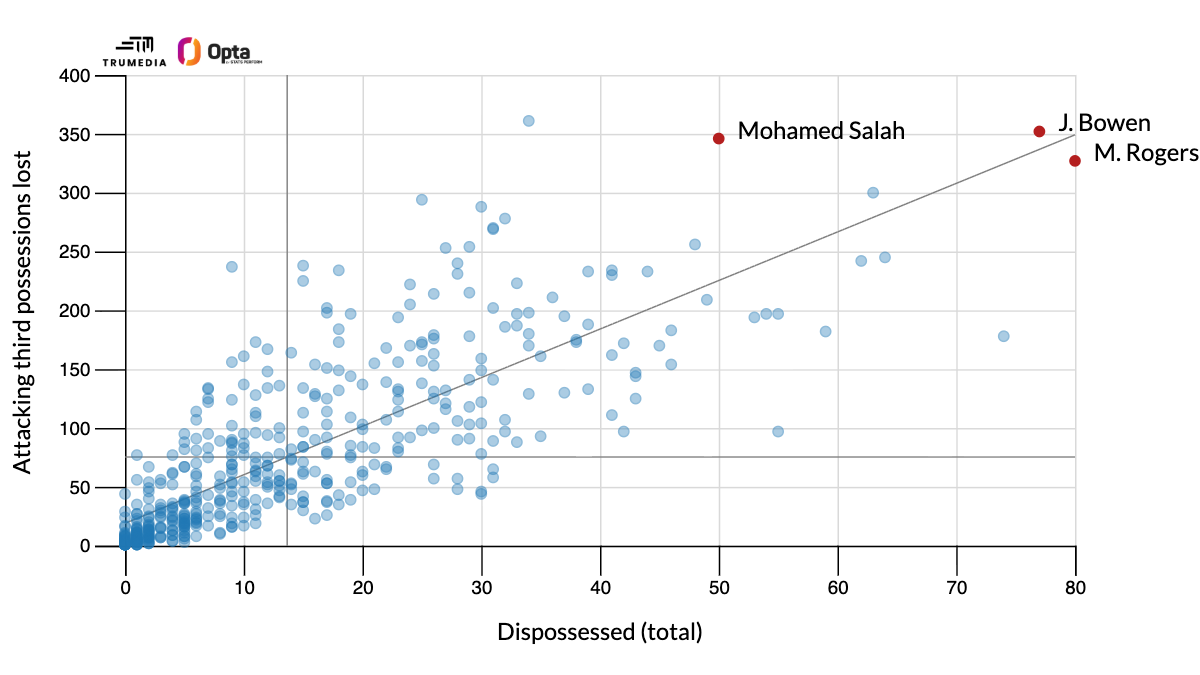
Last season, Rogers was dispossessed more times (80) than any player in the league and lost the ball in the middle or attacking third more times (72) than anyone else. When that happens, the focus will be on him, and the size of the fee Chelsea paid to sign him will be raised alongside it.
That, ultimately, is the nature of the sport. When your transfer costs a record fee, miracles are expected. And the kinds of miracles Anderson will be expected to produce look very different to the ones Rogers would.
In staking this much to sign one player, Chelsea are betting on Rogers to be their Lionel Messi (at Barcelona), Bukayo Saka (Arsenal) or Lamine Yamal (Barcelona). But those three world-class forwards, coincidentally, did not cost a penny in transfer fees for their clubs.